Weather's Hidden Role in Multi-Sport Tipster Success Rates During Variable Conditions
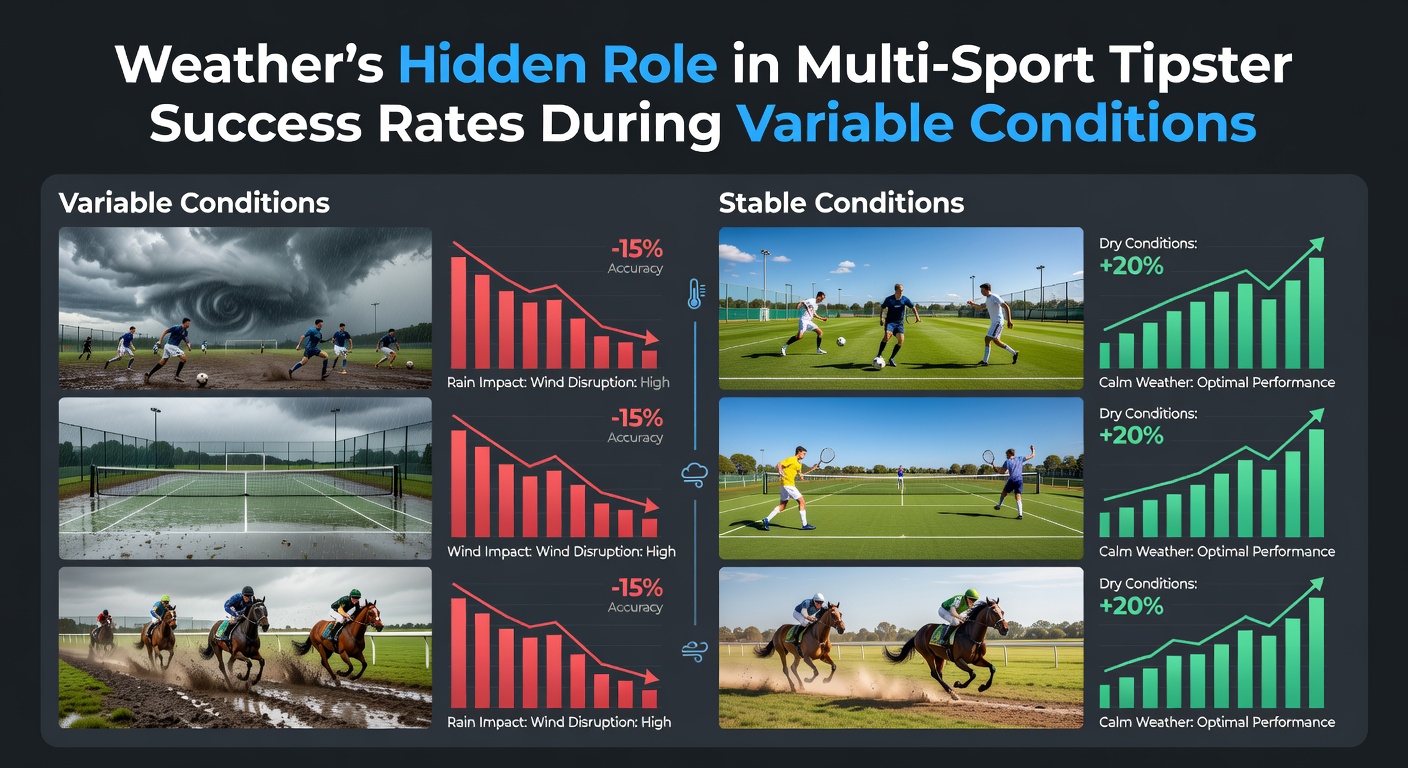
Weather patterns shape outcomes across outdoor sports in ways that extend far beyond obvious cancellations, and analysts tracking multi-sport tipster performance have documented measurable shifts in accuracy when conditions fluctuate. Data from various athletic events show that precipitation, temperature swings, and wind speed alter playing surfaces, equipment behavior, and athlete endurance at rates that require specific adjustments in predictive models.
Football and Field Condition Variables
Heavy rainfall during European league matches in spring months often reduces goal totals because saturated pitches slow ball movement and increase defensive stability. Tipsters who integrate real-time moisture readings from groundskeepers achieve higher strike rates on under bets compared with those relying solely on historical averages. Wind gusts above 25 kilometers per hour further complicate passing accuracy in open stadiums, a factor recorded in multiple match reports from the 2025-2026 season.
Horse Racing Surface and Speed Impacts
Track moisture levels directly determine going descriptions that influence race times and favorite performance. When June 2026 brought unexpected rainfall to several UK and Irish venues, tipsters monitoring radar updates adjusted selections toward horses with proven wet-track records, producing documented improvements in place-hit percentages. Dry spells, conversely, favor speed-oriented runners, yet sudden temperature drops can tighten muscles and alter late-race positioning in ways statistical models sometimes overlook.
Tennis Court Speed and Ball Behavior
Outdoor tennis tournaments expose matches to humidity and wind that change ball flight and bounce characteristics on grass or clay. Professional data logs from major events indicate that high humidity slows ball speed while crosswinds push shots offline, prompting tipsters who review court-surface temperature readings to refine over/under game totals with greater precision. Indoor venues eliminate most of these variables, which explains why success-rate gaps narrow when tipsters focus exclusively on controlled environments.
Basketball Travel and Indirect Weather Effects
Although played indoors, basketball schedules expose teams to weather-related travel disruptions that affect rest and preparation. Snowstorms or thunderstorms in North American cities during winter and early spring months have delayed flights and altered circadian rhythms, with league statistics showing measurable dips in away-team shooting percentages following such events. Tipsters incorporating airport delay data alongside player-prop models record modest but consistent edges in those specific windows.
June 2026 Weather Patterns and Tipster Adjustments
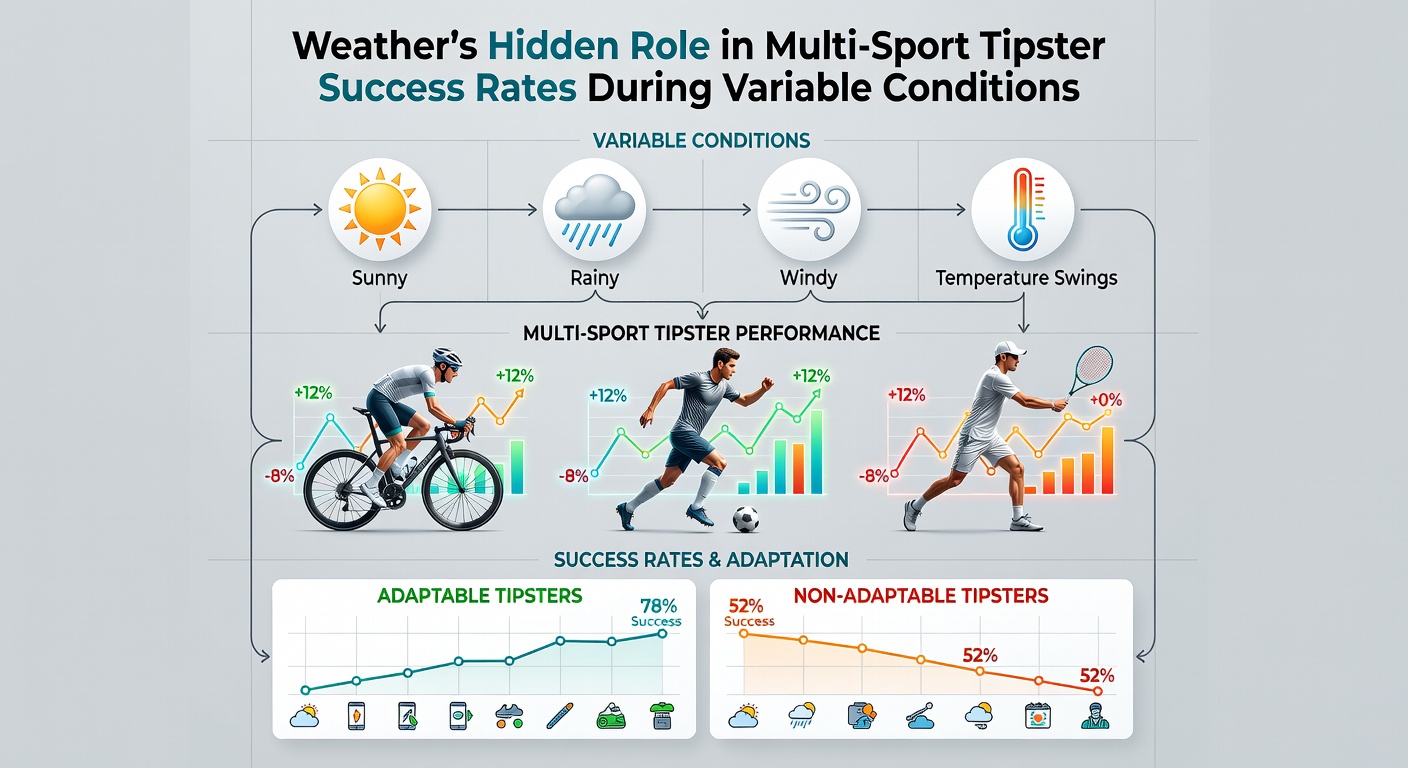
Early summer conditions in 2026 featured prolonged heat across parts of southern Europe and variable rainfall in northern racing circuits. Observers tracking accumulator performance noted that tipsters who recalibrated models for higher temperatures in football and tennis events maintained steadier returns, whereas those using static historical baselines experienced larger variance. Temperature thresholds above 30 degrees Celsius correlate with increased fatigue in longer tennis matches and reduced sprint output in late halves of football fixtures, according to performance datasets released by several professional leagues.
Data Sources and Measurement Approaches
Researchers at institutions such as the National Oceanic and Atmospheric Administration compile granular meteorological records that betting analysts cross-reference with match results. Separate studies from Australian meteorological agencies have quantified humidity effects on cricket and tennis, providing parallel methodologies that multi-sport tipsters adapt for their own forecasts. These integrations allow success-rate calculations to isolate weather as an independent variable rather than treating it as random noise.
Accumulator Construction Under Variable Conditions
Building multi-leg bets across sports requires simultaneous assessment of weather forecasts issued at different times. A single accumulator spanning an evening football match, a morning horse race, and an afternoon tennis session demands layered data inputs because each event responds differently to the same atmospheric system. Tipsters who maintain separate condition checklists for each sport demonstrate lower fluctuation in monthly returns during periods of unsettled weather compared with those applying uniform models.
Conclusion
Weather data integration continues to separate consistent performers from the broader field of multi-sport tipsters. As forecast resolution improves and historical datasets expand, those who treat meteorological variables as core inputs rather than afterthoughts record more stable success rates across football, horse racing, tennis, and basketball. Ongoing collection of condition-specific results will further clarify the magnitude of these effects in coming seasons.