Weather Patterns and Their Documented Impact on Betting Results in Horse Racing, Tennis, and Basketball Leagues

Weather patterns influence outcomes across multiple sports, and records compiled by racing authorities, tennis federations, and league statisticians show measurable shifts in results that directly affect betting markets. Data from track officials, court maintenance logs, and game reports indicate that precipitation, temperature swings, and wind speeds alter playing conditions in ways that change win probabilities and payout structures over time.
Documented Effects in Horse Racing Circuits
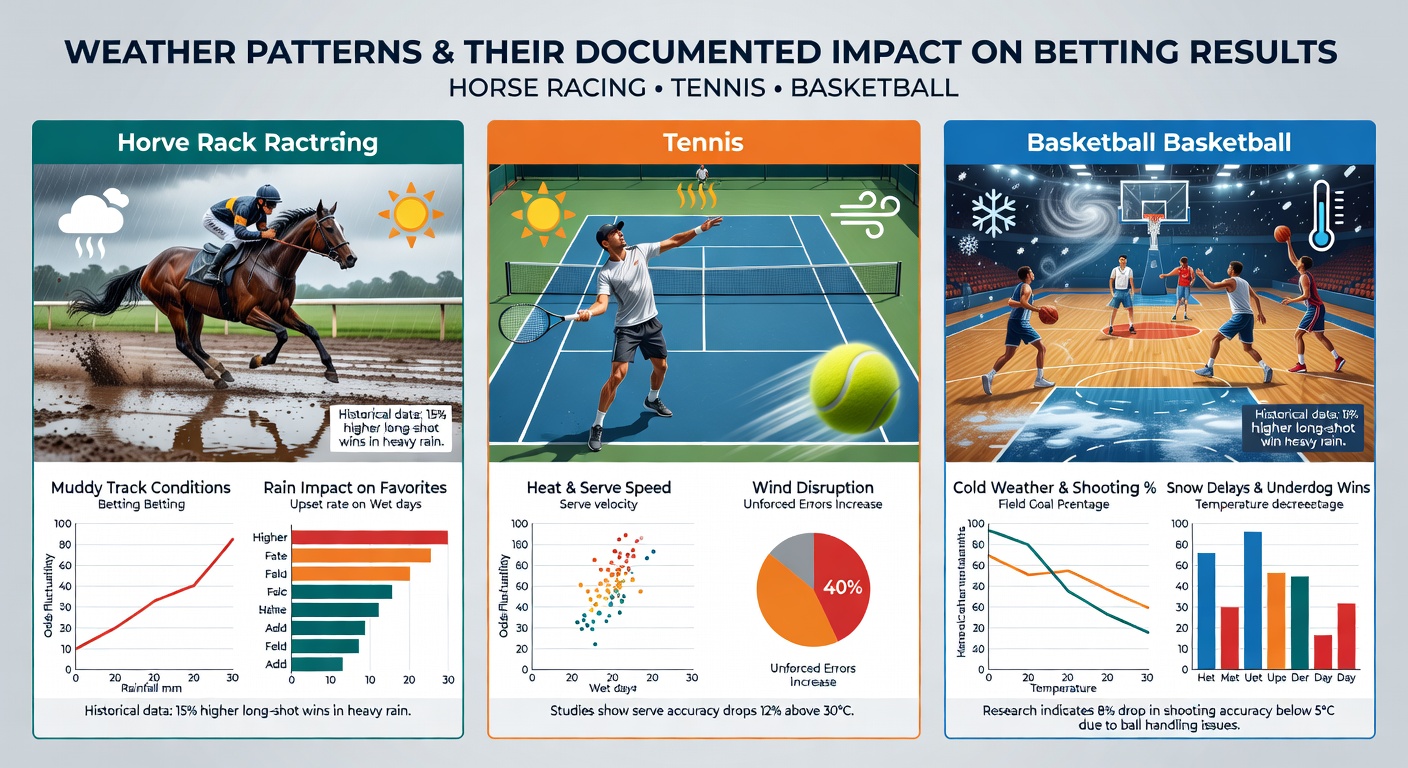
Track surfaces respond quickly to rainfall and temperature changes, and historical data from major circuits reveal consistent patterns in race times and favorite performance. Wet conditions soften turf and dirt, which slows overall speeds while favoring horses with proven mud-running ability, and betting volumes on longshots often rise as public handicappers adjust selections accordingly. Studies tracking thousands of races across seasons show that favorites win at lower rates on sloppy or heavy tracks compared to fast conditions, with payouts reflecting those adjusted odds.
Observers note that spring transitions in the northern hemisphere bring variable showers that complicate pre-race forecasts, and May 2026 schedules at venues like Churchill Downs and Ascot coincide with periods when ground conditions shift rapidly between morning inspections and post time. Records from those events indicate higher variance in finishing margins when sudden downpours occur, prompting bettors to monitor updated track reports more closely than in drier months.
Impacts on Tennis Tournaments and Court Play
Tennis surfaces react differently to weather depending on whether matches occur on grass, clay, or hard courts, and statistical reviews from grand slam archives demonstrate clear correlations between humidity, wind, and serve percentages. High winds increase unforced errors on faster surfaces while slowing ball travel on clay, and rain delays extend match durations which in turn influence fatigue-related outcomes in later sets. Tournament data collected over multiple years shows that extended weather interruptions correlate with higher rates of upsets among seeded players who rely on rhythm and consistency.
Wind speeds above certain thresholds documented by event organizers lead to measurable drops in first-serve accuracy, and betting markets adjust live odds accordingly during affected matches. Those adjustments appear in historical payout records where underdogs covering spreads or winning sets outright occur more frequently under gusty conditions than in calm weather. Tournament directors in both the northern and southern hemispheres publish surface reports that feed directly into pre-match analyses used by prognosticators.
Weather Influences in Basketball Leagues
Although basketball games occur indoors, travel disruptions caused by severe weather affect player rotations and preparation, and league records show connections between adverse conditions and performance metrics. Snowstorms or heavy rain in host cities delay team arrivals, reduce practice time, and alter sleep schedules, with data from the NBA and EuroLeague indicating slight declines in shooting efficiency and defensive metrics following such events. Arena climate control mitigates some external factors, yet reports from team medical staffs link cumulative travel stress from weather-related delays to increased injury reports in subsequent games.
Statistical reviews covering multiple seasons reveal that road teams facing weather-impacted travel win at marginally lower rates than expected based on season averages, and betting lines adjust to account for these documented patterns. In May 2026, playoff schedules in both North American and European leagues fall during periods when spring storms remain common in several regions, creating situations where forecasters incorporate meteorological data alongside injury reports when evaluating matchups.
Cross-Sport Data Patterns and Market Adjustments
Betting platforms aggregate historical results tied to specific weather variables, and industry reports indicate that bookmakers update lines when forecasts predict conditions known to shift outcomes in each sport. Research compiled by academic groups such as those affiliated with the National Oceanic and Atmospheric Administration provides granular meteorological datasets that analysts cross-reference with performance logs from racing, tennis, and basketball events. Those datasets allow for the identification of recurring thresholds where precipitation or temperature extremes produce statistically significant deviations from baseline results.
Records maintained by international sports bodies show that bettors who incorporate verified weather forecasts into models achieve different return profiles compared to those relying solely on form and head-to-head statistics. In tennis, for instance, extended rain delays documented at events like the Australian Open correlate with changes in set-win distributions, while horse racing data from the Racing Australia archives highlight similar adjustments during wet-weather meetings. Basketball figures reveal smaller but consistent effects linked to travel rather than direct environmental exposure.
Conclusion
Documented weather impacts across horse racing, tennis, and basketball demonstrate how environmental factors translate into altered performance metrics and betting outcomes. Records from governing bodies, tournament organizers, and statistical agencies establish measurable patterns that markets incorporate over time, and ongoing collection of data during events like those scheduled for May 2026 continues to refine understanding of these relationships.