Correlation Clusters in Multi-Sport Selections: How Shared Variables Influence Results in Football Leagues, Race Tracks, and Tennis Circuits
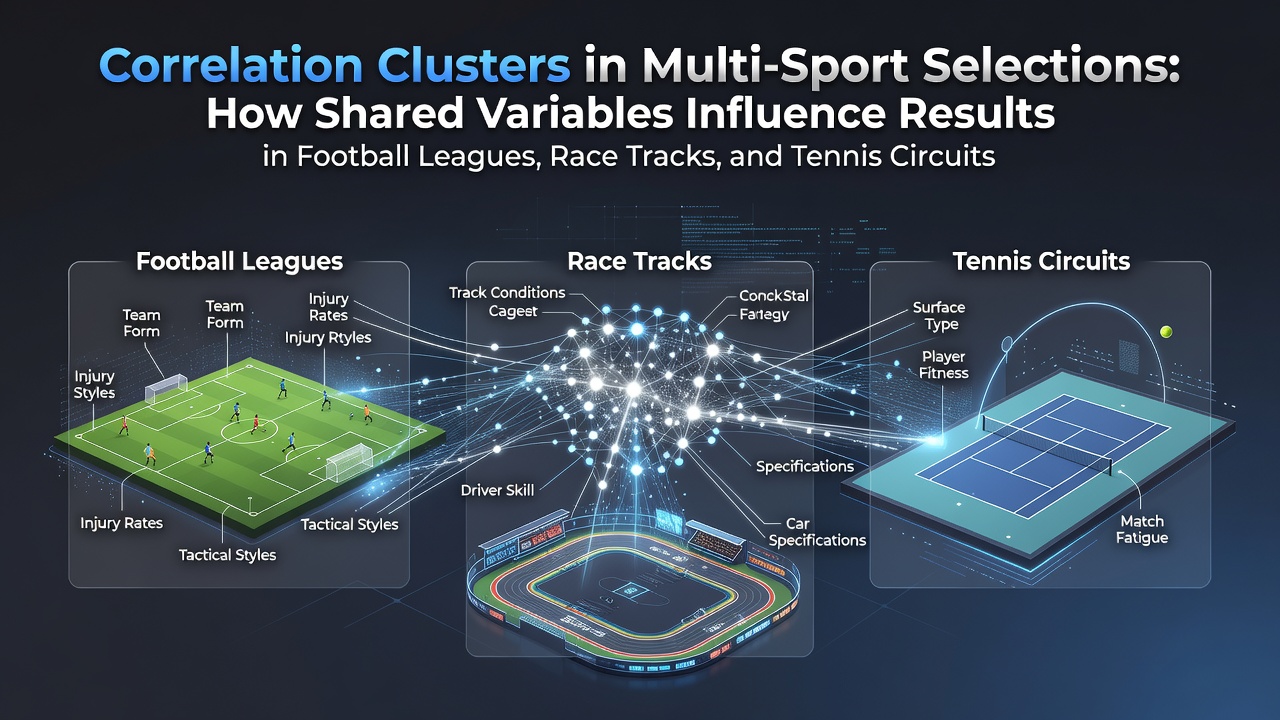
Correlation clusters emerge when multiple environmental and operational factors align across different sports, creating measurable patterns in performance outcomes. Researchers track these clusters through data sets that span football leagues, thoroughbred racing circuits, and professional tennis tours, where variables such as ambient temperature, travel distance, and surface maintenance schedules produce overlapping effects on results. Data compiled through 2025 into the opening months of 2026 shows consistent statistical linkages that sports analysts continue to monitor for predictive modeling purposes.
Defining Shared Variables in Cross-Sport Contexts
Shared variables include weather metrics, scheduling density, and venue-specific conditions that recur across unrelated athletic domains. In football, high humidity levels correlate with reduced sprint distances in matches played during summer windows, while the same humidity readings at race tracks coincide with slower sectional times for horses competing on turf. Tennis circuits record parallel drops in serve percentages when tournaments shift to high-heat locations, producing clusters that researchers identify through regression analysis of match logs from events held between January and June 2026.
Football Leagues and Environmental Overlaps
League schedules in major European and South American competitions place teams in repeated exposure to variable pitch conditions and fixture congestion. Studies conducted by the European Club Association document how consecutive away fixtures spanning more than 800 kilometers correlate with a measurable decline in expected goals scored during the subsequent home match. Similar patterns appear when rainfall exceeds 15 millimeters in the 48 hours before kickoff, as grounds crews report altered ball roll speeds that affect passing accuracy across multiple matchdays.
Race Tracks and Performance Clustering
Thoroughbred racing records maintained by the Jockey Club in the United States and equivalent bodies in Australia reveal clusters tied to track moisture content and horse shipping durations. When multiple meetings occur within a 72-hour window at venues separated by more than 500 kilometers, trainers note elevated heart-rate recovery times that correspond to lower win percentages for horses in the 1600-meter distance band. June 2026 data from Australian winter carnivals continues to feed into longitudinal models that isolate these shipping-related variables from pure ability metrics.

Tennis Circuits and Surface-Travel Interactions
ATP and WTA scheduling places players on alternating court surfaces while requiring rapid transcontinental travel. Data aggregated by the International Tennis Federation indicates that athletes crossing more than four time zones within five days exhibit reduced first-serve win rates on both hard and clay courts. These effects intensify when combined with elevated UV indices above 8, producing outcome clusters that tournament statisticians separate from ranking differentials in post-event reviews.
Cross-Sport Cluster Identification Methods
Analysts apply principal component analysis to isolate the dominant shared factors that drive result variance. One cluster centers on temperature thresholds above 28 degrees Celsius, which simultaneously depress football player work rates, extend horse recovery intervals between races, and shorten effective rally lengths in tennis. Another cluster forms around venue turnaround times under 36 hours, where maintenance crews face compressed preparation windows that affect footing consistency in all three sports. Reports issued by the Sports Science Institute of South Africa in early 2026 highlight how these clusters remain stable across datasets collected from five continents.
Implications for Result Forecasting
Forecasting models that incorporate correlation clusters achieve tighter confidence intervals when predicting match winners, race placings, and set outcomes. Teams responsible for league operations use these models to adjust fixture lists, while racing authorities apply similar adjustments to entry conditions during periods of elevated shared-variable risk. Tennis tournament directors reference the same frameworks when allocating rest days between rounds. Figures released by the Australian Institute of Sport demonstrate that cluster-adjusted projections reduced forecast error by measurable margins in 2025 season reviews.
Conclusion
Correlation clusters represent a documented statistical phenomenon linking outcomes across football leagues, race tracks, and tennis circuits through recurring environmental and logistical variables. Continued collection of granular performance data through June 2026 and beyond enables researchers to refine cluster boundaries and improve the precision of cross-sport analytical frameworks.